
After a long, wet Pacific Northwest winter, many homeowners start noticing changes in their water. Maybe it’s stubborn spots on glassware, a metallic taste in tap water, or a faint sulfur smell when you turn on the shower. While these issues are often lumped together, there’s an important distinction between cosmetic hard-water problems and more serious water quality concerns.
Understanding the difference can help you determine whether a simple adjustment will do, or if it’s time to upgrade your treatment system.
Hard Water: Mostly a Nuisance
Hard water is common throughout the Pacific Northwest, especially in homes with well water. It contains elevated levels of minerals such as calcium and magnesium. While not typically a health risk, hard water can cause frustrating cosmetic issues.
Common signs of hard water include:
- White, chalky buildup on faucets and showerheads
- Soap scum in tubs and sinks
- Cloudy spots on dishes and glassware
- Stiff, scratchy laundry
- Reduced efficiency of water heaters and appliances
If these are your only symptoms, your water softener may simply need maintenance, such as refilling the salt, cleaning the brine tank, or replacing worn components. However, if your softener is more than 10–15 years old and is struggling to keep up, it may be time for a replacement. Modern high-efficiency softeners use less salt and water while delivering more consistent performance.
Water Quality Issues: More Than Cosmetic
When you notice metallic tastes, reddish or black staining, or a rotten egg odor, you’re likely dealing with something beyond basic hardness.
After heavy winter rains, groundwater conditions can shift. In well systems especially, excess runoff can introduce or stir up iron, manganese, sulfur, and other naturally occurring elements. Municipal systems can also experience seasonal changes in water chemistry.
Common warning signs of broader water quality concerns include orange or brown stains from iron, black stains from manganese, blue-green stains from corrosion or acid, metallic or bitter tastes, and sulfuric smells.
These issues may indicate that your current system—a basic sediment filter or older softener—isn’t designed to handle your specific water conditions.
When It’s Time to Upgrade
If your treatment equipment is aging, undersized, or designed for water conditions different from those you currently have, upgrading can protect both your home and your health.
Consider an upgrade if:
- Your water softener is over a decade old
- You’re constantly adjusting settings without improvement
- You’ve added bathrooms or water-using appliances
- You’ve noticed new staining or odors after winter
- You rely on a private well and haven’t tested your water recently
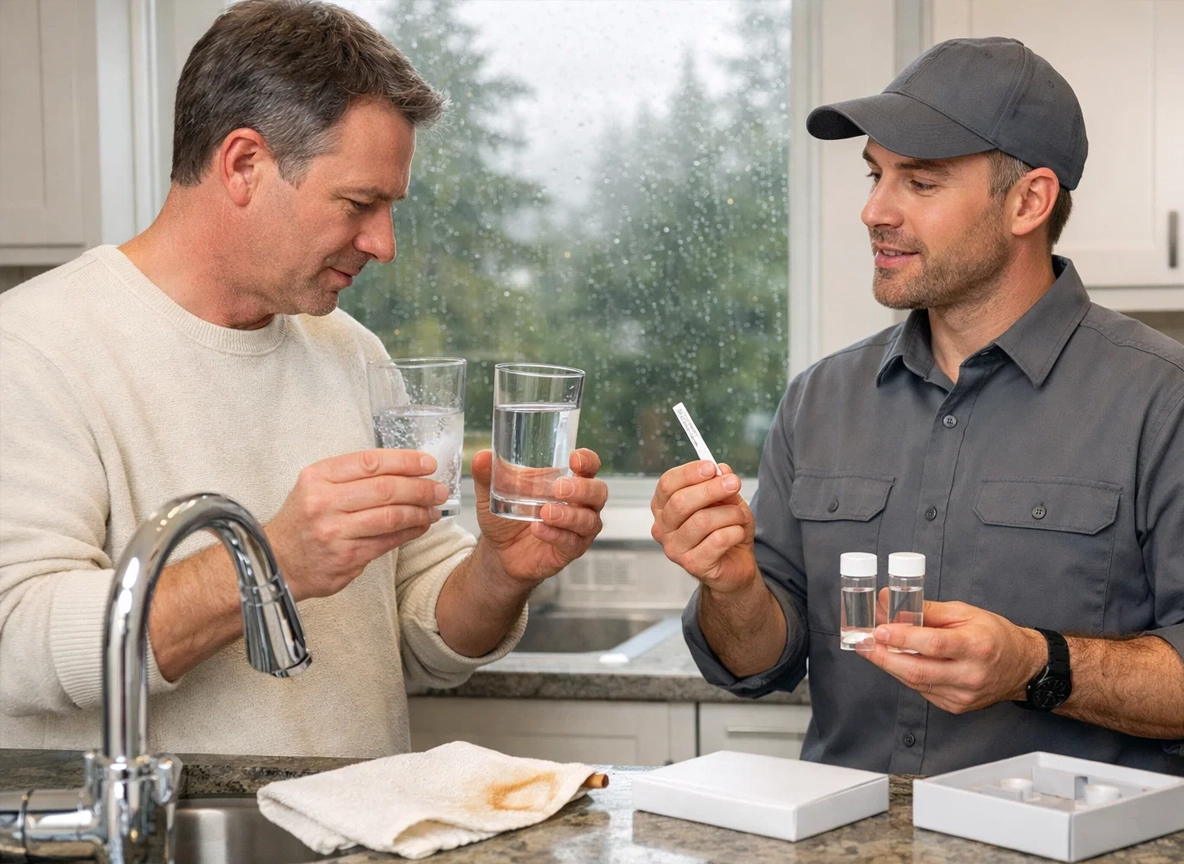
Water testing is the first step. A professional analysis identifies exactly what’s in your water so you can match the right solution to the problem.
Treatment Options for Today’s Homes
Modern water treatment goes far beyond basic softening. Whole-house filtration systems can remove sediment, chlorine, iron, and other contaminants before water reaches any faucet. For well owners, specialized well-water systems can target iron, manganese, sulfur, and acidity with multi-stage filtration or oxidation technology.
In some cases, a combination approach works best—pairing a softener with iron filtration, carbon filtration, or pH correction to address multiple concerns at once.
Contact American Pump and Drilling for an assessment of your home’s water quality, and to explore solutions that don’t break the bank.