Buying a home with a private well in Thurston County can offer independence, lower utility costs, and access to rural properties not connected to municipal water systems. However, owning a well also means you are responsible for water quality, maintenance, and system performance.
Before purchasing a property with a private well—or planning to drill a new one on vacant land—ask the right questions. A thorough inspection and understanding of the water system can help you avoid costly surprises after closing.
1. Has the Well Water Been Recently Tested?
One key question to consider is whether the well water has been tested recently for contaminants. Unlike city water, which is regularly monitored by public utilities, homeowners with private wells need to take responsibility for keeping their water safe.
If you’re buying a home, request current water test results during the inspection contingency period. Water conditions can change over time, so older reports should not be considered reliable proof of water quality.
2. How Old Is the Well and Pump System?
Wells and pump systems have finite lifespans. Ask when the well was drilled, how deep it is, and whether major components like the pump or pressure tank have been replaced.
A failing well pump can cost thousands of dollars to repair or replace. Knowing the system’s age and maintenance history helps you anticipate future expenses. Reviewing your local records can also provide valuable information about construction details and past repairs.
3. Does the Well Produce Enough Water?
Water quantity matters just as much as water quality. A professional flow test can determine whether the well produces enough water to meet household demand.
Low-producing wells may struggle during summer months or periods of heavy use. Some lenders also require minimum flow rates before approving financing on properties with private wells.
4. Is the Well Properly Located and Protected?
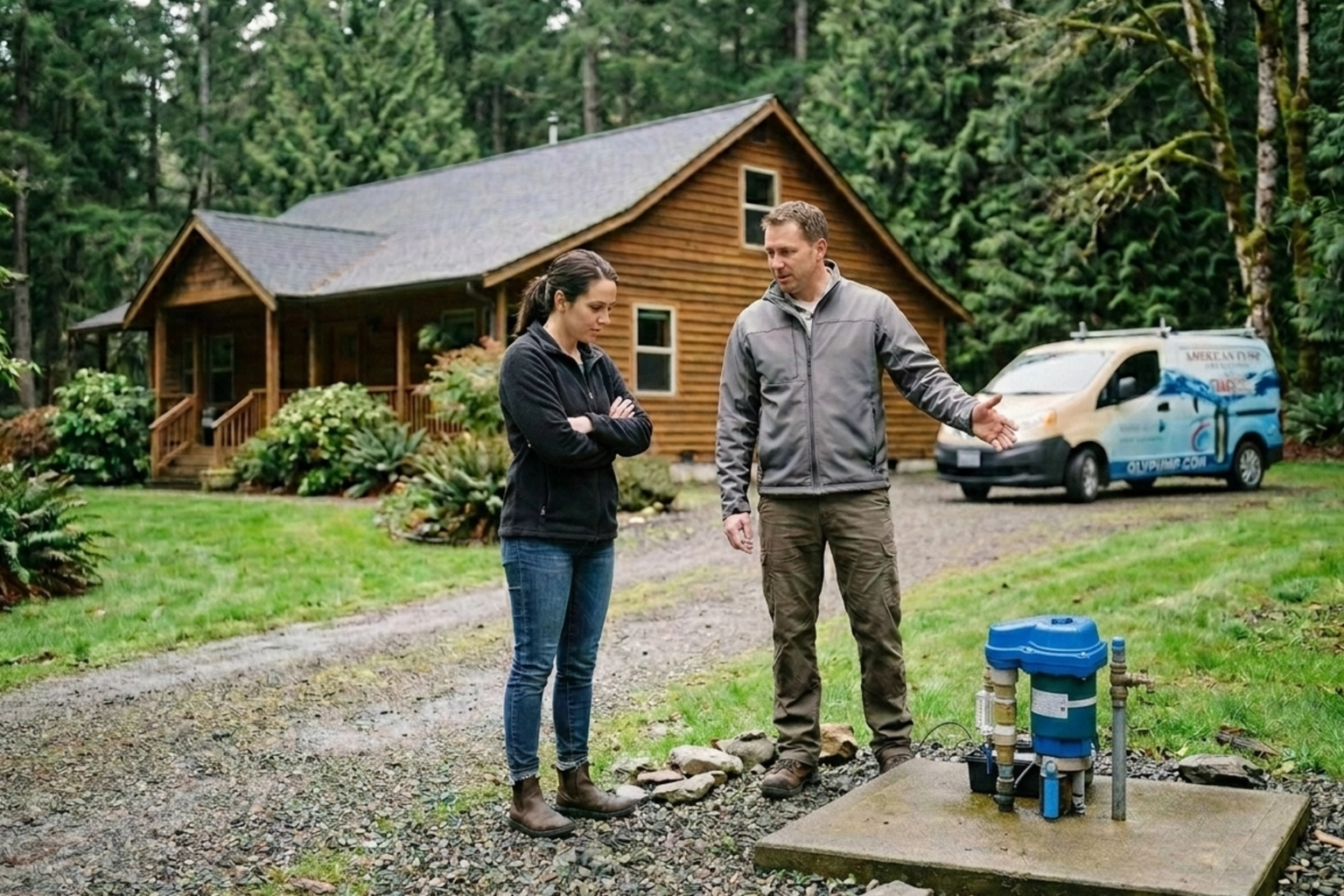
Proper placement of wells is important to keep groundwater safe from pollution. Thurston County recommends placing wells away from septic systems, livestock zones, and other potential sources of contamination to help protect the water.
Inspectors should verify that the well casing is properly sealed and that surface water cannot easily enter the system. Poor drainage around the wellhead can increase contamination risks during heavy rainfall.
Understanding the well’s location can also help identify future limitations for landscaping, construction, or septic upgrades.
5. What Maintenance Will Be Required?
Owning a private well comes with ongoing responsibilities. Routine water testing, pump inspections, pressure tank maintenance, and occasional filtration upgrades may all be necessary over time.
Ask the current homeowner about maintenance records, past repairs, and any known water quality issues. If the property requires water treatment equipment for hardness, iron, or arsenic, make sure you understand operating costs and service schedules before purchasing the home.
Protect Yourself Before Closing
Buying a home with a private well in Thurston County doesn’t need to be stressful — but it does require careful due diligence. By asking the right questions about water quality, well performance, maintenance history, and inspection records, buyers can make informed decisions and avoid costly surprises later.